
Custom drone batteries
Developing a drone platform requires battery sizing that aligns with your drone’s intended uses, your embedded architecture, and operational constraints. In this context, the battery is not an interchangeable component: it is a structuring sub-system that dictates the actual autonomy, available power, and energy stability of your drone.
By relying on technologies adapted to each project—lithium-ion, lithium-polymer, or other chemistries depending on the requirements—we define, design, qualify, and industrialise custom battery packs tailored to your integration needs and performance requirements.
From POC (proof of concept) to series production, we work closely with your teams to turn your concepts into tangible industrial solutions.


and power dynamics
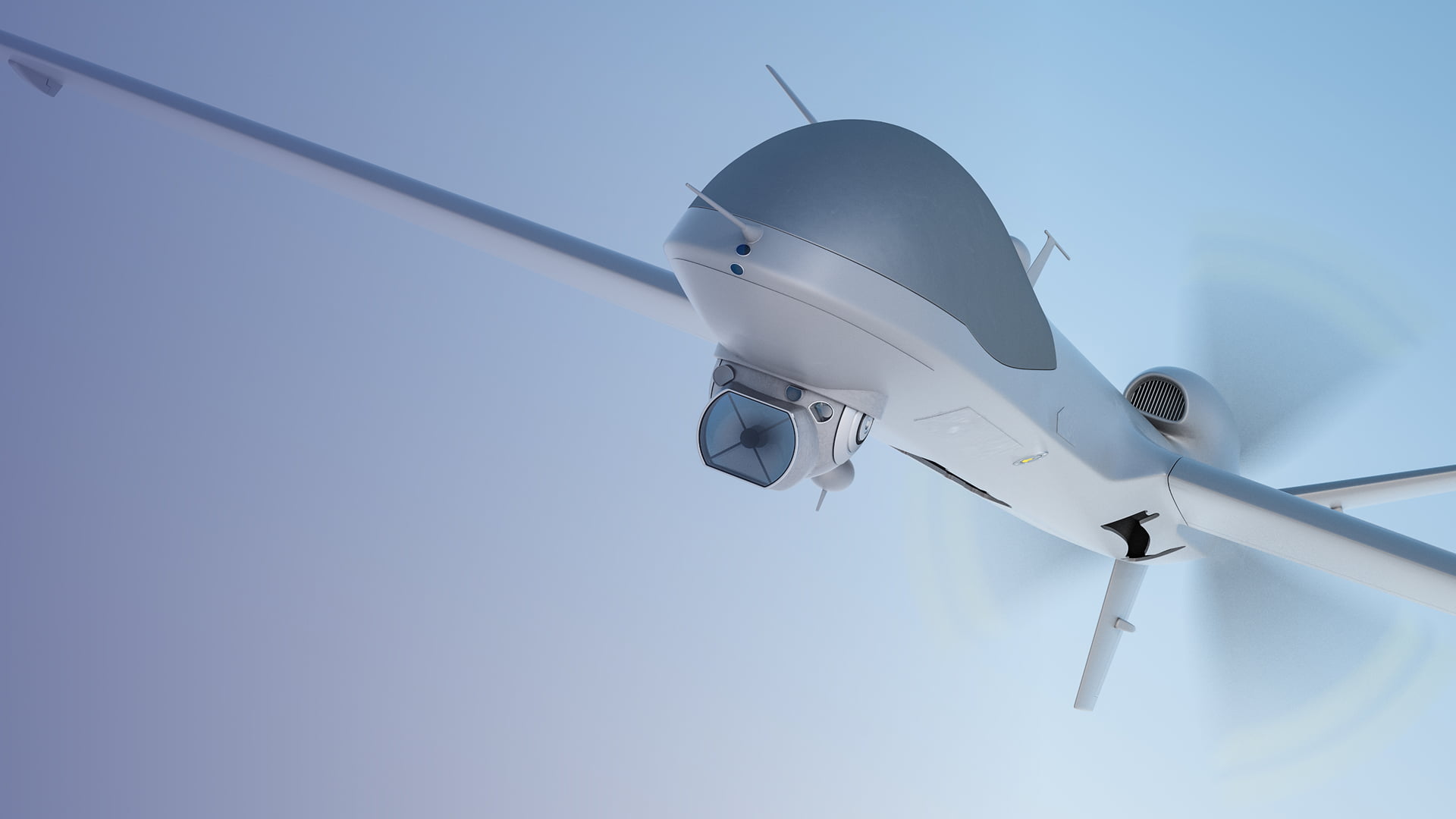
Long-range UAV, stationary-oriented UAS, hybrid VTOL. Each architecture requires different trade-offs in terms of energy, instantaneous power and mass. We size the pack in line with your mission.
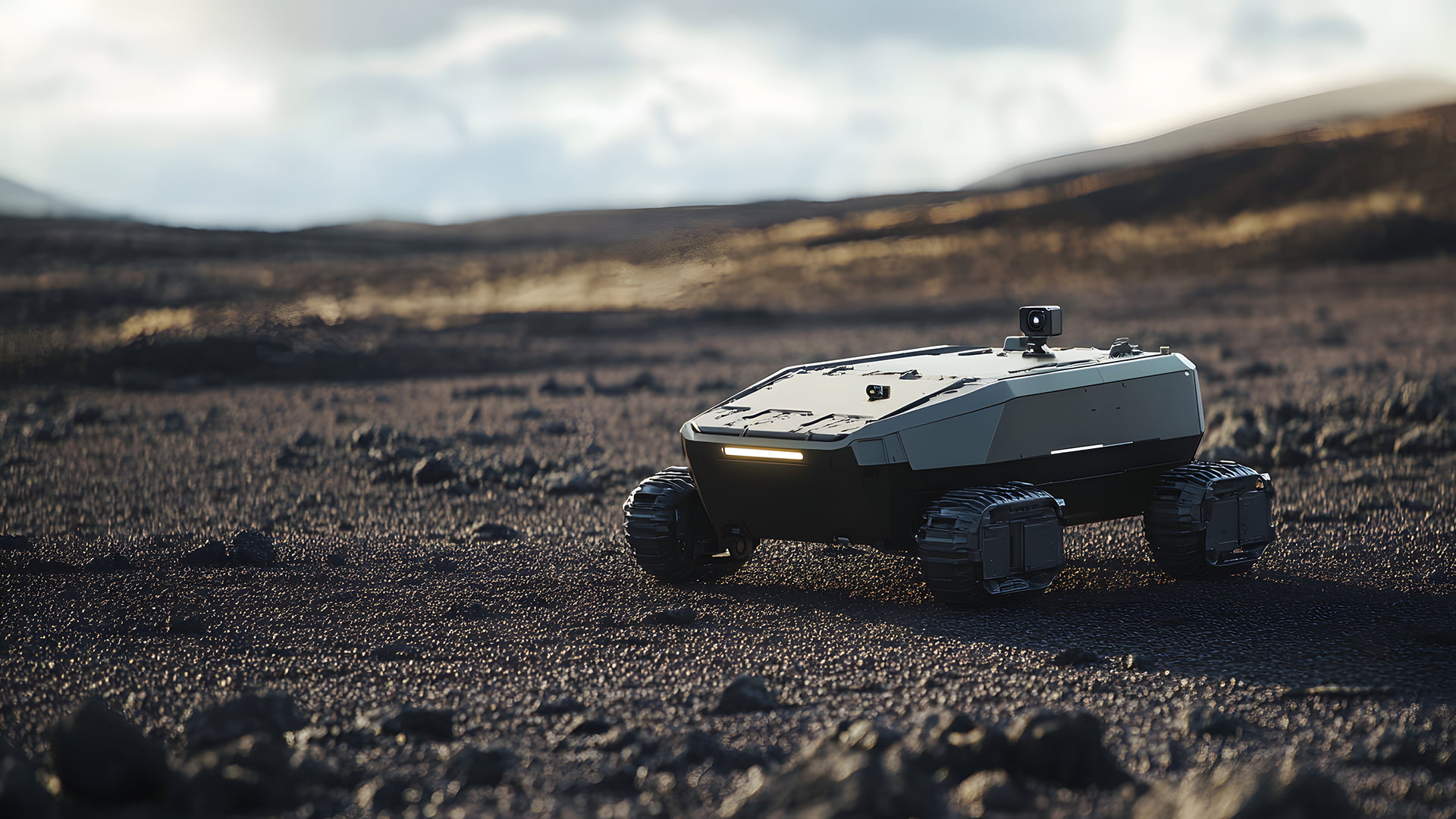
Extended cycles, continuous vibrations, occasional shocks, sometimes difficult environmental conditions: the challenge lies in the mechanical strength of the pack, energy stability over real cycles and consistency with field charging patterns.
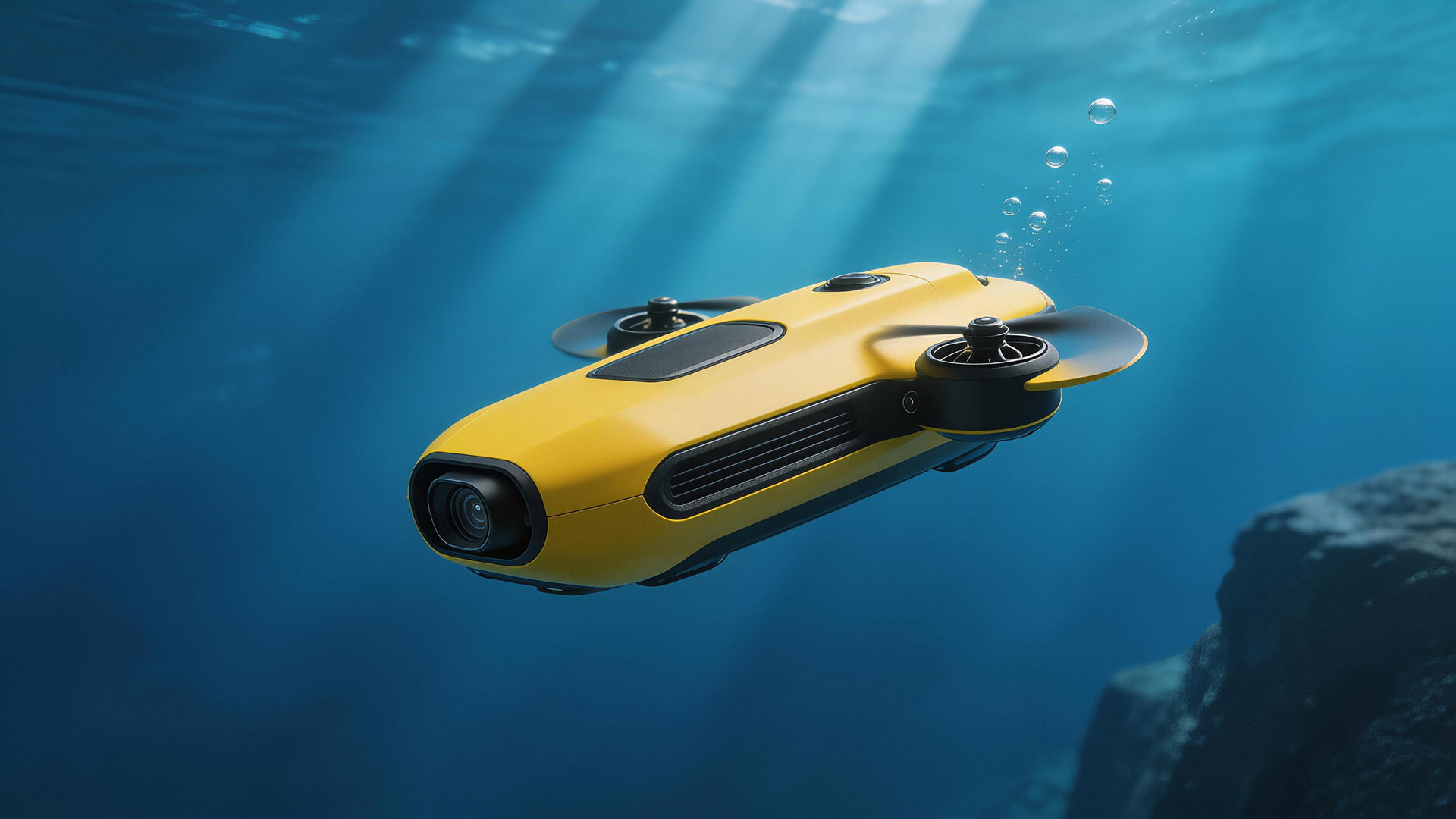
Humidity, salt corrosion, pressure, waterproofing requirements: the maritime environment imposes protection and integration choices that cannot be treated as optional. We develop batteries adapted to these environments.
Why does a professional drone
require a “system” designed battery?
A custom drone battery pack integrates into a cohesive system. Our framework is based on key parameters from the specifications and mission. These parameters allow us to design a custom solution that meets your requirements.
Our collaboration begins at the study phase, or even upstream of the project, to design the battery in parallel with the drone development.
-
The drone's configuration, its applications, its autonomy requirements, its discharge curve, and its
current peaks.
- The integration envelope dedicated to the battery (volume/mass), as well as dimensional and vibration constraints.
-
Compliance requirements according to
geographical areas of operation and scope of
marketing.
Our approach:
structured engineering from A to Z

Architectural review and scoping of constraints
The compliance of a custom drone battery is defined according to the product scope and the countries in which it will be marketed. From the scoping phase onwards, we integrate the applicable requirements in order to secure the architecture (pack + associated electronics), documentation and market launch trajectory.
Depending on your market, the framework includes UN38.3 (transport) and, where applicable, CE marking requirements, with the associated safety and sustainability expectations. We also assist you in preparing the necessary elements for export compliance (non-EU countries) in order to facilitate access to your international markets.
Additional standards (e.g. UL, local requirements) are assessed on a case-by-case basis according to marketing objectives and integration constraints.

Validation with your equipment
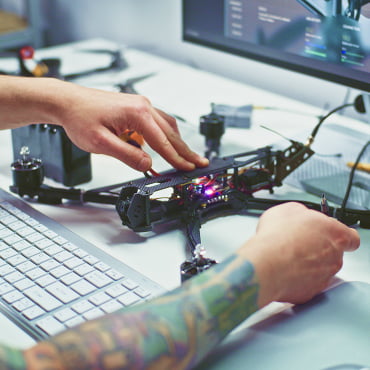
We design and manufacture prototypes, then work with you to organise the validation phase on your platform.
We generally offer two prototypes:
• 1 ENIX prototype: intended for configuration monitoring, design iterations and consolidation of the definition file.
• 1 Client prototype (testing): intended for integration and testing in real conditions by your teams, directly in your application and according to your operating scenarios.
The preliminary study and prototyping phases allow us to validate the solution against the specifications (energy/power, integration, interfaces, behaviour in use) and adjust the architecture before launching into production.

requirements
The compliance of a custom drone battery is defined according to the product scope and the countries in which it will be marketed. From the scoping phase onwards, we integrate the applicable requirements in order to secure the architecture (pack + associated electronics), documentation and market launch trajectory.
Depending on your market, the framework includes UN38.3 (transport) and, where applicable, CE marking requirements, with the associated safety and sustainability expectations. We also assist you in preparing the necessary elements for export compliance (non-EU countries) in order to facilitate access to your international markets.
Additional standards (e.g. UL, local requirements) are assessed on a case-by-case basis according to marketing objectives and integration constraints.
From prototype to consistent quality at target volume
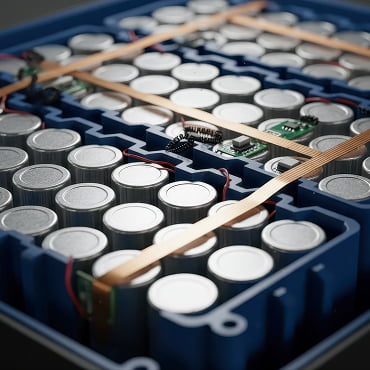
Industrialisation aims for controlled production, with consistent quality, at the target volume:
definition → qualification → production.
We ensure volume ramp-up, from small batches to industrial series, with controlled production.

Validation under real conditions
The pack is validated by your teams, under real conditions and in your application, according to your operating scenarios (mission profile, environment, cycles).
We work with you to define the validation plan and acceptance criteria in order to secure the definition freeze and transition to production.
Please note: the testing phase can sometimes last several months, depending on the mission and usage cycles.
Technical design:
Our 3 main axes
Chemistry and cells: Li-ion, LiPo, others depending on constraints
There is no such thing as ‘better chemistry’ per se. There is only the chemistry that is most consistent with your use. Depending on the target autonomy, power consumption profile, safety constraints and operating environment, we choose the most suitable technology: lithium-ion, lithium-polymer, or other chemistry depending on the project requirements, format and grade of the accumulator or battery.
Battery pack architecture and mechanical integration
We design custom battery packs tailored to your budget: compact, elongated or modular formats, with mechanical and electrical interfaces consistent with your platform. The format is aligned with your architecture, not with a standard.
Drone BMS: protection, balancing, communication
The BMS is often the sensitive point between the battery and the rest of the onboard system. Whether it is on the battery or on the charger, we define a management system adapted to your use: charge/discharge control, protection, active or passive balancing, communication with the onboard electronics according to system requirements.
A European presence,
a structured value chain
We are a division of the UPERGY Group, certified ISO 9001, ISO 14001, and ISO 13485, with locations in France, England, and Spain. This organisation allows us to manage your project seamlessly, from design to manufacturing, with a quality approach compatible with industrial practices and European market constraints.
What we require
to start working on your projet
First step in the process: to start the study on a solid foundation, please provide the following information: application, nominal voltage, target energy/capacity (Ah/Wh), envisaged technology (if already decided), projected volumes, and integration constraints (format, size, interfaces, environment).
This information serves as a starting point. It enables an initial technical assessment, followed by the start of the process: prototypes, validation on your application, market requirements and industrialisation trajectory.
Are you developing an industrial drone? Let's discuss energy architecture.
An initial technical review allows us to quickly identify key structural choices and points to consider:
- Energy/power sizing,
- Pack + electronics/BMS integration,
- Validation logic for your application,
- Transport constraints and requirements related to target markets.
Advantages of using Enix Power Solutions for your project:
- Bespoke solutions built to your specification
- Design & Characterisation
Speak to a member of our OEM specialist team about custom drone batteries
- Contact Form
- UK: +44 (0) 121 506 8610
- Custom Battery Pack Enquiry